
UK Tote Betting Pools and Dividend Patterns at Lingfield
 Available in US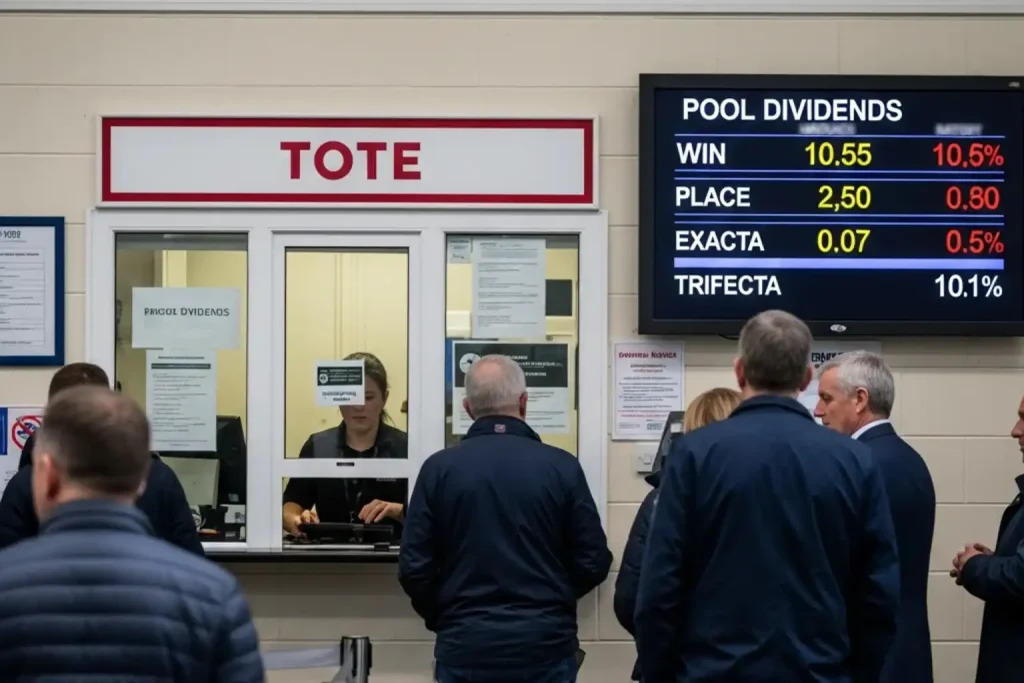
Maximising Value with UK Tote Betting Pools and Dividends
Pool betting has been part of British racing since 1928, when the Racecourse Betting Control Board was established to run the Tote — a state-backed alternative to the fixed-odds bookmakers who had dominated the sport for centuries. The principle was simple: instead of betting against a bookmaker at a fixed price, punters bet into a pool, and the total is divided among the winners after a deduction for operating costs. Nearly a century later, the Tote still operates under this model, now owned by a consortium of betting industry investors, and it offers a genuinely different way to bet on racing.
The pool plays by different rules. The maths are different, the value opportunities are different, and the patterns at specific courses like Lingfield produce their own set of insights. This guide covers the mechanics, the comparison with fixed-odds betting, and what Tote dividend data reveals at Lingfield meetings.
How Pool Betting Works: Tote Mechanics
The core Tote pools for individual races are Totewin and Toteplace. A Totewin bet pays if your horse wins. A Toteplace bet pays if your horse finishes in the placed positions (first, second, or third in races with eight or more runners; first and second in smaller fields). The returns are not fixed at the time of the bet — they are determined after the race, based on how much money went into the pool and how it was distributed across the runners.
The calculation works like this: all stakes in the pool are added together. The Tote takes a deduction — currently around 13.5% for the Totewin pool and varying rates for other pools — and the remainder is divided among the winning ticket holders in proportion to their stake. If a popular favourite wins, the dividend is small because many people backed it and the pool is split many ways. If an outsider wins, the dividend can be very large because few bettors backed it and the pool is concentrated.
Horse racing generated £766.7 million in gross gambling yield from remote betting in the year to March 2026, a figure dominated by fixed-odds bookmakers. The Tote’s share of total racing turnover is smaller, but pool betting serves a distinct purpose in the market: it offers an alternative return structure that can deliver better value than fixed odds on specific outcomes, particularly when the public overbacks a favourite.
Beyond the basic win and place pools, the Tote operates multi-race pools that have become popular with regular racegoers. The Placepot requires you to pick a placed horse in each of the first six races on a card. The Jackpot requires picking the winner of each of the first six races. The Scoop6 is a Saturday-only pool across six televised races, with a rollover mechanism that can build the prize to six or seven figures. These pools operate on the same principle — total stakes, minus deduction, divided among winners — but the difficulty of the task means the dividends can be enormous when the results go against the favourites.
Tote vs Fixed Odds: When Each Has the Edge
The fundamental difference is timing. With a fixed-odds bookmaker, you know your price at the moment you place the bet. With the Tote, you do not — the dividend is calculated after the race, once all the money is in the pool. This creates a different risk-reward profile for each type of bet.
Fixed odds give you certainty. If you take 8/1, you get 8/1 regardless of what happens in the market after your bet. The downside is that the bookmaker has priced in their margin: the overround built into fixed-odds markets means the true implied probabilities of all outcomes sum to more than 100%, which is how the bookmaker guarantees a profit. The Tote’s deduction serves the same purpose, but the way it plays out is different. Because the pool is shaped by the collective behaviour of all bettors — not by a bookmaker’s pricing team — the effective odds on individual horses can differ significantly from fixed-odds equivalents.
The Tote tends to offer better value when the public overbacks the favourite. In races where a dominant market leader attracts a disproportionate share of the win pool, the Tote dividend on that favourite will be lower than the SP — but the dividends on the other runners in the field will be higher. If you are backing a second or third favourite in a race with a heavily-backed market leader, the Tote may return more than fixed odds. Conversely, if you are backing the favourite itself, fixed odds will usually offer a better deal because the bookmaker’s price for favourites tends to be more generous than the Tote dividend.
The Tote also handles dead heats and non-runners differently. In a dead heat, the Tote pool is split — each dead-heater’s dividend is reduced proportionally. Non-runners result in stakes being returned for Totewin and Toteplace bets, and the pool is recalculated excluding those bets. In multi-race pools like the Placepot, a non-runner means the favourite in that race is substituted for your selection.
Tote Dividend Patterns at Lingfield
Analysis from Geegeez has shown that Lingfield is not a course for outsiders — horses at 7/1 or bigger historically lose punters 45p for every pound staked to SP. This favourite-biased course profile has a direct Tote implication: when favourites dominate, the Totewin dividend is compressed (many people backed the winner, so the pool is split widely), but the Toteplace dividends on the placed horses can offer genuine value because the place pool is less heavily skewed toward the favourite.
On midweek Lingfield cards, where the betting audience is smaller and more expert, Tote pool sizes can be thin. A thin pool amplifies the effect of individual large bets — one punter placing a substantial Totewin bet on a specific horse can visibly depress the dividend if that horse wins. For this reason, the Tote tends to be more predictable and more useful at Lingfield’s feature meetings (Winter Derby, Vase Day, well-attended Saturday cards) where the pools are deep enough to smooth out individual bet effects.
The Placepot at Lingfield is worth particular attention. A six-race card with average fields of eight to ten runners offers a manageable number of permutations, and the Polytrack’s consistency reduces the randomness that makes turf Placepots so volatile. Lingfield Placepot dividends are generally modest — reflecting the relative predictability of AW results — but the lower cost of covering several races with small stakes makes it an accessible and engaging way to follow a full card.
