
UK Horse Racing Data: Lingfield Race Results and Course Stats
 Available in US
Every finish. Every factor. Data-driven.
Complete results hub for Lingfield Park — the only British racecourse staging Flat all-weather, Flat turf and National Hunt racing on a single site. Every finish, every factor, every dataset that matters.
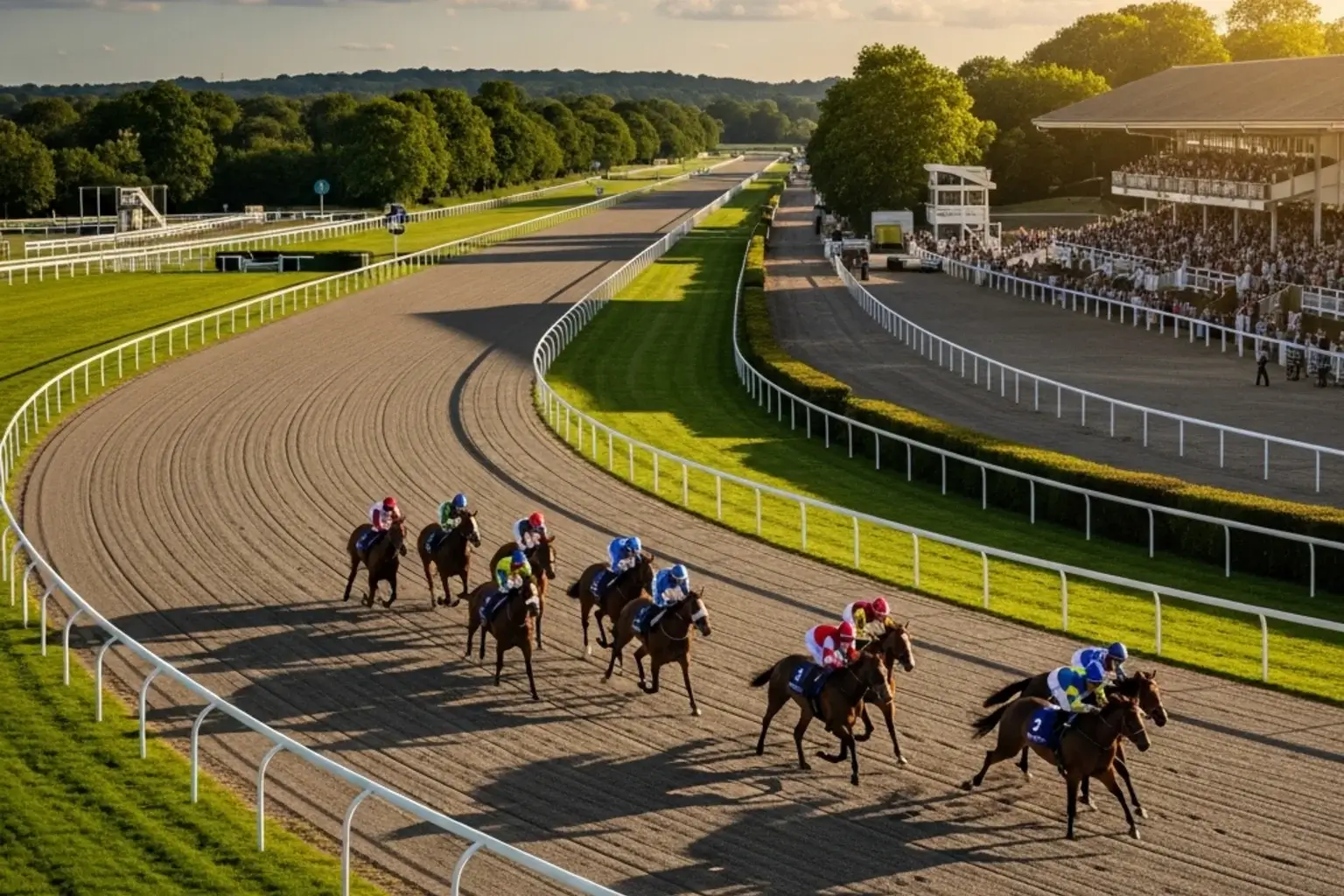
Most UK racecourses specialise. They run Flat or jumps, turf or all-weather, and their results tell a single story. Lingfield Park tells three. It is the only racecourse in Britain that stages Flat all-weather racing on Polytrack, Flat turf racing on its tight left-handed loop, and National Hunt fixtures over fences and hurdles across the winter months. That triple-format identity makes UK horse results from Lingfield an unusually rich dataset — one where surface, configuration and seasonal context collide in ways that simply do not exist elsewhere in the fixture list.
Situated on a large estate in Surrey, just south of the M25, Lingfield hosts around eighty race days each year, placing it among the busiest venues in the country. The all-weather programme runs from October right through to the spring, keeping the results flowing when frost and waterlogging shut down turf tracks across the Midlands and the North. For punters, form students and racing professionals alike, that year-round output transforms Lingfield into a reference point — a venue whose results carry weight whether you are dissecting draw bias at five furlongs, tracking trainer strike rates on the Polytrack, or working out whether the Winter Derby favourite is worth the price.
This guide is built around those results. Every section ahead is designed to help you extract more from Lingfield data: where to find today's finishing order, how to navigate the archive, what the stall numbers actually mean across different distances, and which trainers and jockeys deliver consistent returns on this particular surface. If you have ever scrolled through a race result and wondered what the figures really tell you, or whether the course layout matters as much as the pundits claim, you are in the right place. Every finish. Every factor.
Analysing Lingfield Race Results and Course Statistics
- Lingfield is Britain's only triple-format racecourse, staging around 80 race days a year on Polytrack, turf and National Hunt courses — producing uniquely diverse results data.
- High draws dominate turf sprints at five and six furlongs; on the Polytrack, stall position has no measurable impact across 2,900+ tracked races.
- The Winter Derby returned to Lingfield in 2026 after two years at Southwell; nine Derby Trial winners have gone on to Epsom glory since 1932.
- National horse numbers fell to 21,728 in 2025 and betting turnover dropped 4.3% — context that shapes field sizes and market reliability at every Lingfield meeting.
- Record industry prize money of £194.7 million in 2025 and £77.1 million in HBLB funding for 2026 signal growing investment in the fixtures this guide covers.
Today's Lingfield Race Results
Lingfield's all-weather programme means there are results to check on most weekdays between October and April, with turf meetings added from late spring through the summer. Check back after each race for updated finishing positions, starting prices and official times.
Whether you are looking for Lingfield results today or trying to confirm what happened at yesterday's meeting, the key is understanding the rhythm of the fixture list. The all-weather calendar keeps Lingfield active when many turf-only courses go dark, which means midweek cards — often starting at lunchtime — are the norm rather than the exception. A typical AW meeting features six to eight races, spread across distances from five furlongs to two miles, with Class 4 to Class 6 handicaps forming the backbone of the programme.
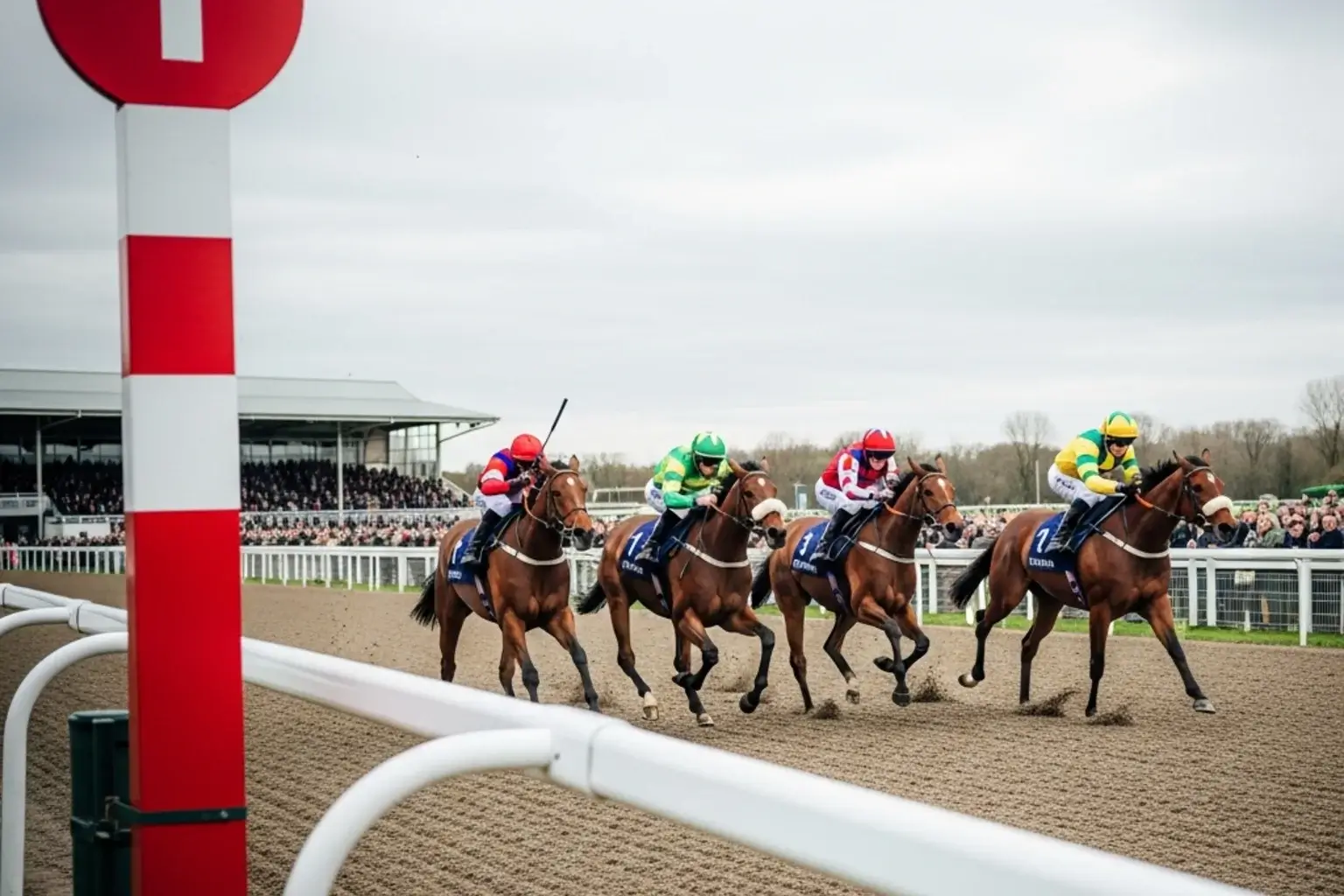
Each result line you see carries a stack of information compressed into a surprisingly small space. The finishing order comes first, followed by the horse's name, the jockey, the trainer, the starting price and the official time. For handicaps — which account for the majority of races at Lingfield — you will also find the horse's official BHA rating and the weight carried. The SP column is worth watching closely: it tells you where the money went in the final minutes before the off, which is often the most honest signal the market produces.
Lingfield results yesterday tend to attract attention from two distinct groups. Casual punters check to see whether their accumulator landed; form students come back the following morning to log runs, assess how the ground played, and note which horses were given quiet rides that might signal a future tilt. If you are in the second camp, pay particular attention to the margins between finishers. A horse beaten half a length in a Class 5 handicap at a mile on the Polytrack may be well worth following next time, especially if the SP drifted late — a sign the market underestimated the chance.
Timing matters too. Live results are typically confirmed within minutes of a race finishing, but the official result — which accounts for stewards' enquiries, amended distances and any disqualifications — can take a little longer to settle. If you are using results to inform a bet on a later race at the same meeting, always wait for the weigh-in confirmation before drawing conclusions about the track bias or pace dynamics of the card.
Lingfield Results Archive: Searching Past Races
The Lingfield horse racing results archive is where casual checking becomes serious form study. Filter by date, distance, class and surface to isolate the patterns that matter for your next bet.
A single result tells you who won. An archive tells you why they won, and whether they are likely to do it again. The value of Lingfield's historical results lies in the volume: with around eighty meetings a year, the archive grows quickly, and the Polytrack programme in particular generates enough data to draw statistically meaningful conclusions about draw bias, trainer performance and pace dynamics over relatively short periods.
When you search the archive, filtering by surface is the first essential step. Lumping Polytrack and turf results together produces misleading averages, because the two surfaces reward fundamentally different running styles and favour different types of horse. A horse with a strong all-weather record may be entirely mediocre on turf, and the archive will make that distinction clear — but only if you separate the datasets from the start.
Distance filtering is the second lever that transforms noise into signal. Lingfield's AW track offers races at five furlongs, six furlongs, seven furlongs, a mile, a mile and two furlongs, and a mile and four furlongs. Each distance has its own character. The five-furlong dash on the Polytrack is sharp, low-draw-neutral and often dominated by pace; the mile and two starts on a chute and joins the main loop with a sweeping bend that can bunch up fields. Filtering by distance lets you compare like with like when you are tracking a horse's form progression.
Class is the third filter worth using carefully. The BHA's 2025 Racing Report revealed that average Flat field sizes fell to 8.90 runners per race nationally, down from 9.14 the previous year, while jumps fields dropped to 7.84. At Lingfield, lower-class AW handicaps tend to buck that trend slightly — the Polytrack attracts a deeper pool of all-weather specialists — but the upper-class races can be thinner. Knowing the typical field size for the class you are researching prevents you from over-interpreting results from small fields, where a single non-runner or pace collapse can distort everything.
One practical tip: when you search the archive for a specific horse, pay as much attention to the conditions column as to the finishing position. A horse that finished fourth in a Class 4 at a mile on standard-to-slow Polytrack is a different proposition from one that finished fourth at a mile on good-to-firm turf. The surface and the going are part of the result, not background decoration.
Lingfield Park Course Guide: Three Tracks in One Venue
Lingfield Park is the only racecourse in Britain staging all three formats — Flat all-weather, Flat turf and National Hunt — on a single site, making its results uniquely diverse among UK venues.
The 450-acre estate in Surrey has been staging racing since 1890, when the Prince of Wales — later Edward VII — opened the gates. But the venue's modern identity was forged almost a century later, in 1989, when Lingfield became the first racecourse in Britain to install an all-weather surface. That decision turned a provincial turf track into a year-round operation. Today, Lingfield hosts approximately eighty race days annually across its three distinct configurations, a fixture count that places it among the busiest in the country.
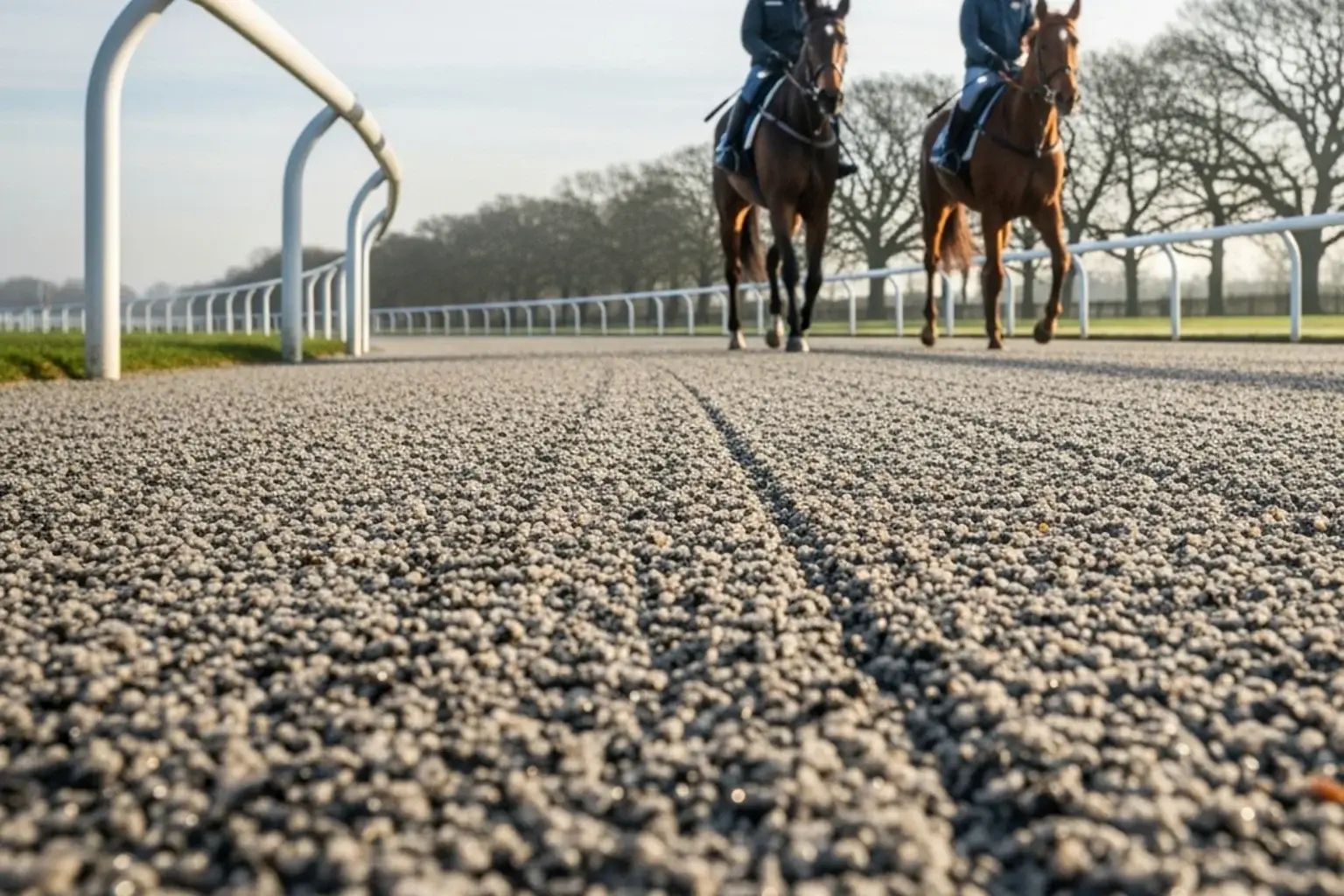
The Polytrack all-weather circuit is the engine room. It is a left-handed loop of approximately a mile and two furlongs, with a separate five-furlong straight course that joins the main track at the home turn. Polytrack itself is a blend of recycled synthetic fibres, PVC granules and quartz sand, bound with a wax coating. Three UK racecourses use it — Lingfield, Kempton Park and Chelmsford City — but Lingfield's configuration, with its sharp bends and relatively short straight, gives it a distinctive character. Pace carries well on the surface, drainage is almost instant, and the kickback is minimal compared with dirt or Fibresand.
Safety data reinforces why the industry values synthetic surfaces. The Jockey Club's Equine Injury Database recorded a fatality rate of just 1.11 per 1,000 starts across all surfaces in 2024 — the lowest since the EID's inception in 2009, representing a 44.5% reduction over fifteen years. Synthetic tracks posted an even lower rate of 1.02 per 1,000. Put another way, 99.89% of flat starts in 2024 concluded without a fatal incident. Research from the Pegasus Training Center has found that Polytrack surfaces are associated with approximately 50% fewer injuries compared with dirt — a figure that goes some way toward explaining why trainers are comfortable sending lightly raced or injury-prone horses to Lingfield's AW card.
"It is remarkable and indeed gratifying to see the sustained improvement in these figures" — Professor Tim Parkin, University of Bristol, who has served as a consultant to the EID since 2009. The numbers bear out his assessment: the long-term downward trend in fatality rates has coincided with the expansion of synthetic surfaces across both British and American racing.
Practitioners on the ground echo the data. Martin Collins Enterprises, the manufacturer of Polytrack, cites feedback from Melbourne Racing Club describing the surface as one that has endured extreme conditions while remaining remarkably forgiving and consistent. That consistency is precisely what makes Lingfield's AW results such a reliable dataset: unlike turf, where ground conditions shift between firm and heavy across a single week, the Polytrack delivers a predictable baseline that makes form comparisons meaningful.
The turf course sits inside the all-weather loop. It is a sharp, undulating left-handed track of roughly a mile and two furlongs, with a pronounced downhill run from the five-furlong start to the home turn. The cambered bends and limited straight — about two and a half furlongs from the final bend to the winning post — favour handy, agile horses that can travel on the bridle through the turns and quicken when straightened up. Long-striding gallopers that need time to hit top gear can find themselves running out of real estate. The turf programme runs from approximately May to October, with going descriptions ranging from good to firm in summer to soft and occasionally heavy in the autumn.
The National Hunt course shares some of the turf layout but adds chase fences and hurdle flights around a left-handed oval. The sharp bends demand sure-footed jumpers; slick, accurate fencing is rewarded more than raw scope. Lingfield's jumps programme is concentrated in the winter months, typically from November to March, and the meetings tend to be modest affairs — Class 4 and Class 5 handicaps, novice hurdles and maiden chasers — rather than the graded action found at Cheltenham or Sandown. Still, for trainers based in the south-east, Lingfield's NH fixtures offer a convenient opportunity to give young jumpers racecourse experience without a long journey north.
When Lingfield installed its original all-weather track in 1989, the surface was Equitrack, not Polytrack. The switch to Polytrack came in 2001, and the current surface has been relaid and upgraded several times since. The 1989 installation made Lingfield a genuine pioneer — the first venue in the country to break the weather's monopoly on the fixture list.
Draw Bias at Lingfield: What the Stall Data Shows
On the turf course, high draws hold a massive advantage at five and six furlongs. On the Polytrack, the draw bias is statistically negligible across all distances — a distinction that many casual punters overlook entirely.
Draw bias is one of those topics where received wisdom and actual data rarely agree. At Lingfield, the gap between perception and reality is wider than usual, because the racecourse operates two entirely different track configurations with fundamentally different draw characteristics. Treat them as one and you will make avoidable errors. Treat them separately, using surface-specific data, and the stall numbers start telling you something genuinely useful.
On the turf course, the bias at sprint distances is well documented and persistent. Analysis from DrawBias.com classifies the five-furlong and six-furlong turf sprints as showing a "massive bias" in favour of high-drawn horses — those racing on the far side, nearest the stands' rail. The geometry of the course explains why. The five-furlong start feeds into a left-hand bend that takes runners downhill toward the home turn. Horses drawn low are pushed wide on the bend, losing ground at a stage where fractions of a second matter. At six furlongs, the effect is slightly diluted but still significant enough to influence the result in a field of ten or more. If you are betting on Lingfield turf sprints and ignoring stall position, you are essentially giving away an edge.
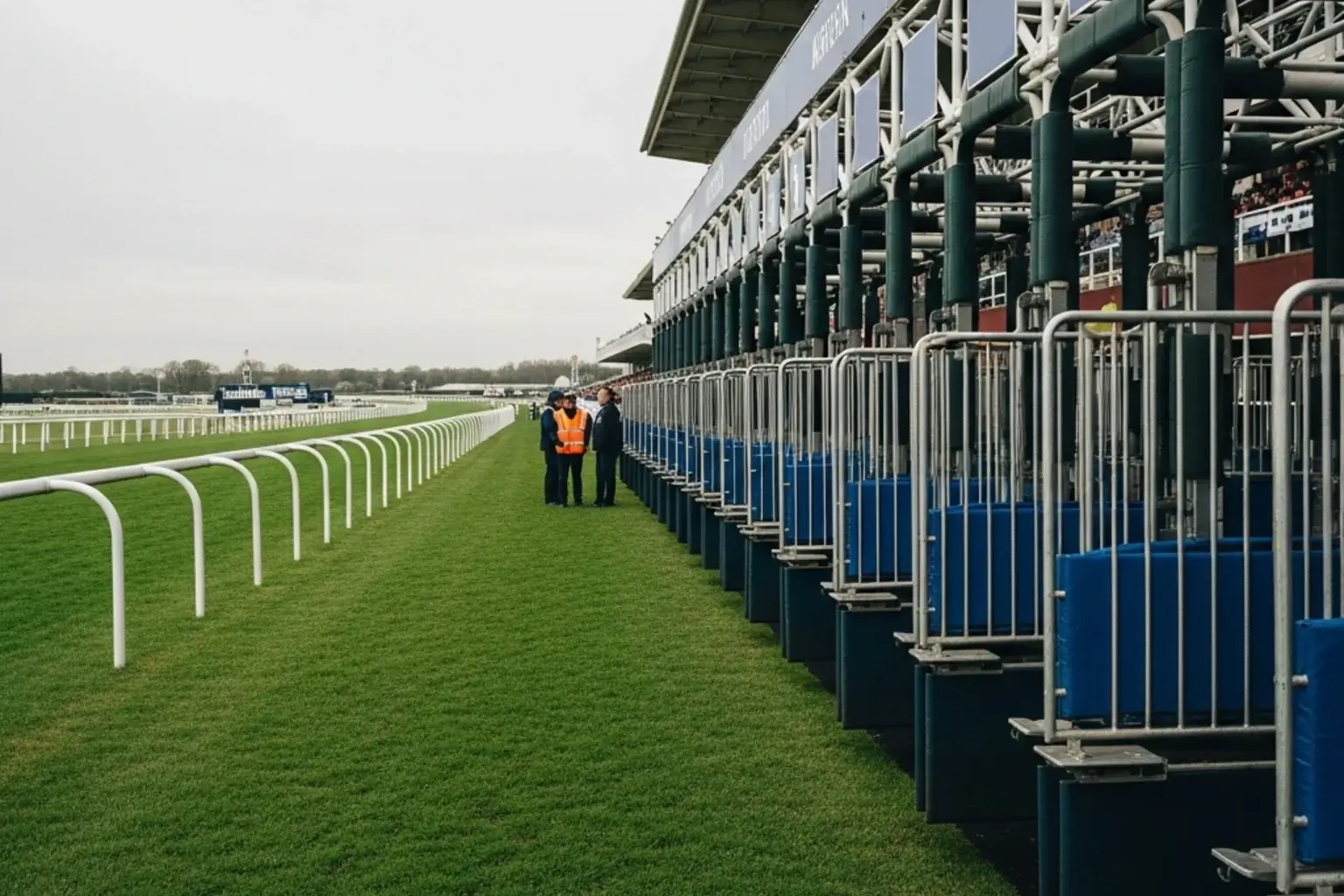
On the Polytrack, the picture changes entirely. Over the standard AW distances — five furlongs, six furlongs, seven furlongs, a mile and beyond — the draw data shows no statistically meaningful bias. The reasons are partly structural: the AW circuit is wider, the bends are less acute, and the surface does not develop the kind of rail-favouring strip that turf tracks produce during dry spells. The five-furlong AW course is a straight run, which eliminates any bend-related effect entirely.
The sample sizes underpinning these conclusions are worth noting, because they separate serious analysis from anecdotal noise. Data compiled by One Stop Racing over a five-year period tracks 557 races and 5,560 runners at five furlongs on the AW, 691 races and 7,348 runners at six furlongs, 720 races and 7,224 runners at seven furlongs, 596 races and 6,289 runners at a mile, and 341 races with 3,494 runners at a mile and two furlongs. Those are not thin datasets. When thousands of runners show no discernible stall advantage, the absence of bias is the finding — not a gap in the evidence.
There is a related myth worth dismantling. Lingfield's Polytrack has a reputation as a "hold-up course" — a track where patient horses racing from the rear have a tactical edge. The data tells a more nuanced story. Pace analysis from DrawBias.com confirms that hold-up runners do outperform at five furlongs on the AW, where front-runners tend to burn out in the final furlong on the straight course. But at six furlongs, seven furlongs and beyond, Lingfield's pace dynamics sit squarely in the middle of the AW pack — neither strongly favouring prominent racers nor rewarding those ridden from off the pace. The "hold-up track" label is a generalisation built on the five-furlong pattern and carelessly applied to every distance.
As the data team at Geegeez observed in their all-weather analysis, Lingfield is not a venue where outsiders thrive — horses ranked seventh or lower in the betting tend to produce consistent losses to SP. That finding dovetails with the draw and pace data: on a predictable surface with well-understood biases, the market gets it right more often than not, and the value lies in precision rather than speculation.
Practical takeaway: on turf sprints, weight your assessment toward high draws. On the Polytrack, ignore the stall and focus on form, fitness and class. The draw is not the edge here — the surface is.
Lingfield's Biggest Races: Winter Derby, Derby Trial and AW Championships
Lingfield punches above its class thanks to three signature fixtures: the Winter Derby, the historic Derby Trial, and the All-Weather Champions Vase. Together they anchor the spring 2026 calendar and attract runners of genuine Group-race quality.
British racing's total prize money reached a record £194.7 million in 2025 — a 3.5% increase on the previous year, funded by a combination of racecourse contributions (£103.3 million), Levy Board payments (£63.3 million) and owner-funded supplements. Kevin Walsh, Racing Director of the Racecourse Association, described the rise as strong ongoing investment in the sport, representing a continued incentive for participants to field horses at British racecourses. That investment filters down to Lingfield's biggest days, which have seen steadily rising purses over the past decade.
The Winter Derby is Lingfield's crown jewel — a Group 3 contest over approximately a mile and two furlongs on the Polytrack, first run in 1998. After two years of exile at Southwell (a result of fixture-list reorganisation in 2024 and 2025), the race returned to Lingfield in February 2026, and the homecoming produced a result that reminded everyone why this event matters. Sky Safari won at 6/1, defeating the heavily backed Chancellor (sent off 4/6 favourite), in a performance that underlined the Winter Derby's capacity to reward shrewd form analysis over blind market obedience. The average starting price of Winter Derby winners across twenty-three runnings is 5/1 — a figure that suggests a race where quality typically rises to the top, but where upsets are far from rare.
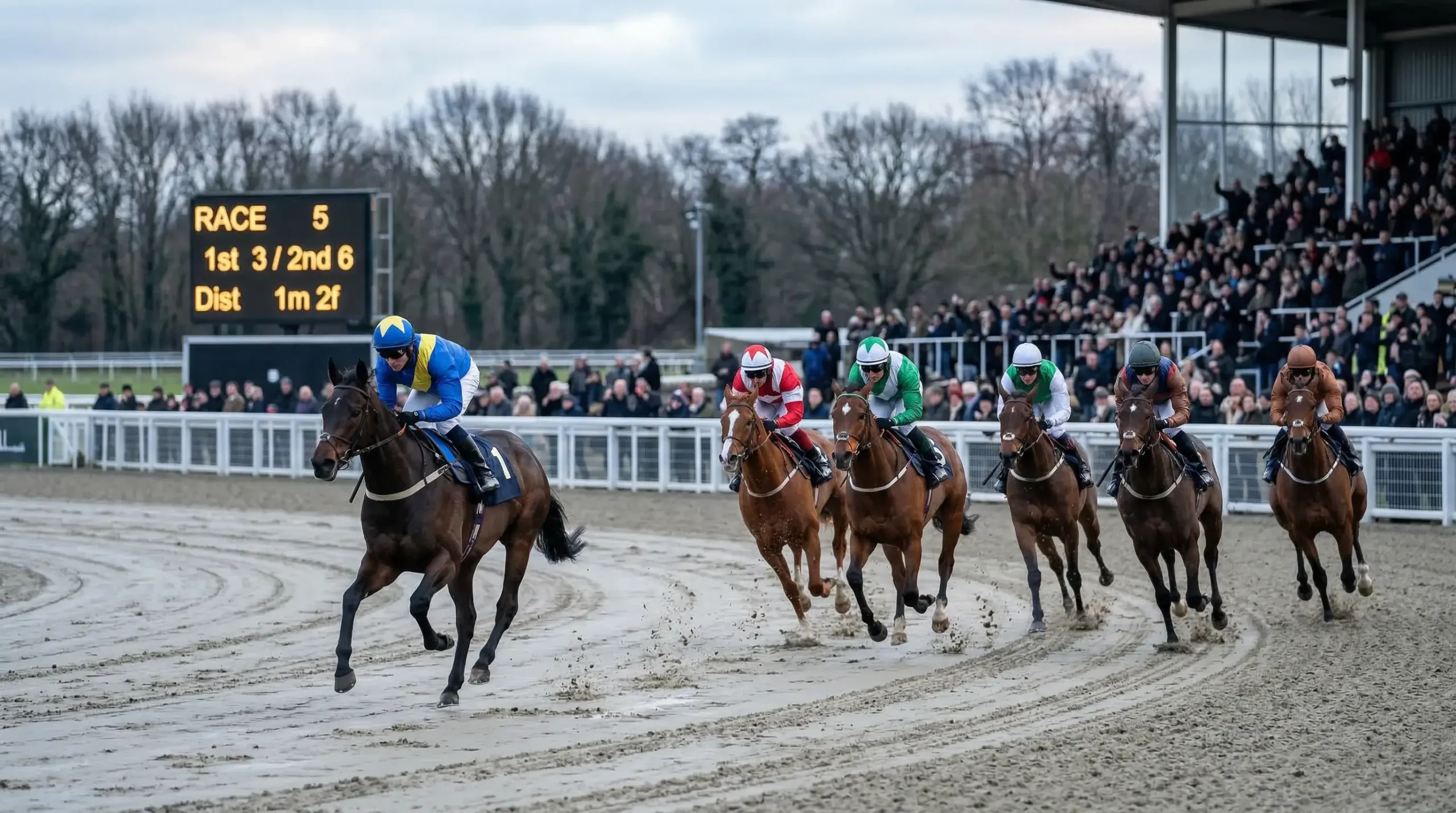
The Derby Trial carries a different kind of prestige. Established in 1932, it has served as a proving ground for Classic contenders heading to Epsom. Nine winners of the Lingfield Derby Trial have gone on to win the Epsom Derby itself — a strike rate that no other trial race in the calendar can match. The most recent example in terms of direct progression was Anthony Van Dyck, who took the Trial in 2019 before winning the Derby the following month. Even near-misses carry weight: Adayar, who finished second in the 2021 Trial, went on to Derby glory at Epsom. The race is typically scheduled for mid-May, and the result is scrutinised by ante-post markets within minutes of the winning post.
The All-Weather Champions Vase is the newest of Lingfield's flagship events but has rapidly become central to the AW calendar. Staged at Lingfield Park, the Vase card features six races with a combined prize fund of £395,000 — a showcase event designed to complement the All-Weather Championships Finals Day at Newcastle, where over £1 million is distributed across the feature card. Ed Arkell, Clerk of the Course at Lingfield, has noted that the quality of horses targeted at these events is improving year on year, reflecting trainers' growing willingness to plan specifically for the AW championship trail rather than treating it as a consolation route.
Underpinning the entire programme is public investment. The Horserace Betting Levy Board committed a record £77.1 million to the sport for 2026, with an additional £4.4 million directed toward prize money — of which £3.2 million was ringfenced for developmental races designed to strengthen the lower tiers of the fixture list. Richard Wayman, the BHA's Director of Racing, framed the 2026 programme as one built around delivering high-quality, competitive and engaging racing that appeals to owners, trainers and the sport's wider customer base. For Lingfield, that means the biggest days are better funded than at any point in the course's history.
The quality at the top of the card is one thing. The depth of the roster beneath it — the trainers and jockeys who grind out results meeting after meeting — is another story entirely, and the trends there are not all heading in a comfortable direction.
Trainer and Jockey Stats at Lingfield
Lingfield's year-round AW programme produces enough data to identify genuine course specialists among trainers and jockeys — but the national context of shrinking horse numbers means the pool is getting smaller, not deeper.
The first thing to understand about trainer performance at Lingfield is that the all-weather card is disproportionately important. Because the Polytrack programme runs from October to April — a window when turf tracks are often inactive — trainers who gear their operations toward all-weather racing accumulate a significant number of Lingfield runs. Yards in the south-east with easy access to the Surrey venue tend to dominate the stats, not because they are inherently superior, but because proximity and surface familiarity compound over dozens of meetings.
The trainers who consistently top the Lingfield tables share certain characteristics. They run large strings of AW-bred or AW-suited horses, they tend to claim races at the right class level rather than overreaching, and they are skilled at placing horses on quick turnarounds — often bringing runners back within seven to fourteen days on the same surface. The strike rate for the top ten trainers by Lingfield wins typically sits between 15% and 22%, which compares favourably with the national Flat average. Where the picture becomes more interesting is when you overlay return on investment: a trainer with a 20% strike rate is impressive, but if the horses are consistently sent off at short prices, the bettor's profit margin evaporates. Identifying trainers who produce winners at odds that beat the implied probability is where the analytical edge lies.
On the jockey side, certain riders have developed a near-telepathic understanding of the Lingfield Polytrack. The tight bends reward pilots who can position their mounts on the rail through the turns and kick at exactly the right moment. Flat jockeys who ride the AW circuit regularly — particularly those retained by the top Lingfield trainers — accumulate a course knowledge that translates into measurably higher win rates than their overall record would suggest. The practical lesson for punters is straightforward: when a jockey who rides Lingfield three or four times a week is aboard a well-handicapped horse, the combination of course knowledge and surface familiarity is a tangible advantage, not just a talking point.
The wider context, however, introduces a note of caution. The BHA's 2025 Racing Report documented that the number of horses in training in Britain fell to 21,728 — a 2.3% decline on the previous year, extending a pattern of roughly 1.5% annual shrinkage that has been running since 2022. Fewer horses in training means thinner fields, reduced competitive depth, and a narrower pool of runners from which to identify betting value. The effect is not uniform — big yards with buying power continue to refresh their rosters — but for smaller operations that supply the bread-and-butter AW handicaps at Lingfield, the squeeze is real.
Betting turnover on British racing mirrors the trend. The same BHA report recorded a 4.3% year-on-year decline in overall betting turnover, and a more sobering 10.7% drop compared with 2023 levels. Average turnover per race fell by 5.6%. Richard Wayman, the BHA's Director of Racing, acknowledged the challenge plainly, noting that the trends are heading in the wrong direction for both Flat and jumps horses, which has prompted the sport to develop a strategy aimed at supporting the growth of horse numbers and the quality of the runners in Britain.
For anyone using Lingfield trainer and jockey stats to inform betting decisions, the practical implication is clear: the data is still valuable, but the sample it draws from is narrowing. A trainer's 18% strike rate this season may look identical to last year's, yet if the fields they are competing against have shrunk by a runner per race on average, the actual competitive context is different. Factor in field size when you assess any performance metric, and give extra weight to trainers and jockeys who maintain their figures in fields of eight or more runners — that is where the genuine Lingfield specialists stand out.
How to Read Lingfield Race Results
A Lingfield result line contains more actionable information than most newcomers realise. Understanding starting price, form figures, class levels and going descriptions transforms a list of finishing positions into a genuine decision-making tool.
Horse racing has a reputation for being impenetrable to outsiders, and the way results are presented does not always help. But the fundamentals are less complicated than they look, and once you understand what each element means, a single Lingfield result can tell you more about a horse's ability, fitness and prospects than a page of pundit opinion. British racecourse attendance hit 5.031 million in 2025 — the first time the figure exceeded five million since before the pandemic — and an estimated 68% of ticket buyers were casual or first-time visitors. If you are among that majority, this section is designed to bridge the gap between spectator and student.
Starting Price is the odds at which a horse was officially returned at the moment the race started. It reflects the final judgment of on-course bookmakers and is the price used to settle bets placed without specifying a particular odds. At Lingfield, where AW fields are typically between eight and twelve runners, the SP is generally reliable as a gauge of each horse's chance — but it is not infallible. Late market moves (a horse shortening from 8/1 to 5/1 in the final two minutes, for example) can indicate money arriving from well-informed sources, and tracking SP movement over successive runs is one of the simplest ways to spot a horse whose connections believe it is ready to win.
Form figures are the string of numbers — and sometimes letters — that appears beside each horse's name. The most recent run is always on the right. A sequence like 3-2-1 tells you the horse finished third, then second, then won its last start — a textbook upward trajectory. The letter "F" means fell, "P" means pulled up, "U" means unseated rider, and a dash indicates a break between seasons. At Lingfield, where many horses race frequently on the Polytrack, it is common to see long form strings that cover ten or twelve runs. Focus on the most recent three to five entries, and pay particular attention to the surface: a form figure earned on turf at Goodwood is not directly comparable to one earned on Lingfield's Polytrack.
Class levels define the competitive band. British Flat racing runs from Class 1 (the highest, including Group and Listed races) down to Class 7 (the lowest). The majority of Lingfield's AW programme falls in the Class 4 to Class 6 range, which means you are dealing with handicaps where the BHA rating system attempts to equalise chances through weight. A horse rated 75 carrying ten stone in a Class 5 is, in theory, given the same chance as a horse rated 60 carrying eight stone twelve. In practice, the system is imperfect — rising-profile horses moving up through the ratings often outperform their official mark — and spotting those improvers is one of the most reliable paths to finding value in Lingfield results.
Going descriptions tell you the state of the racing surface. On the Polytrack, the going is almost always returned as "standard" or "standard to slow." That consistency is one of the surface's main attractions: it rarely changes significantly between races, which makes form comparisons from one meeting to the next much more dependable than on turf, where ground conditions can shift from good to soft within a day of rain. On Lingfield's turf course, the going scale runs from firm through good to firm, good, good to soft, soft and heavy, and each step along that spectrum alters which types of horse are favoured.
One more element worth understanding is the handicap system itself. Since January 2026, the BHA has enforced a new rule preventing horses from running more than fifteen pounds out of the handicap — a change designed to improve competitiveness and, in the context of jumps racing, reduce risk. As Richard Wayman of the BHA explained, it is unusual for horses to run from a long way out of the handicap, but when they do, they generally struggle to be competitive and, particularly over jumps, the situation can create heightened risk. The rule has a practical impact on how you read Lingfield results: if a horse is running close to its official rating in a handicap, it is competing on more level terms, and the result is a cleaner data point for future assessment.
A/E Index — Actual runners versus Expected winners, based on SP. An A/E above 1.00 means a trainer or jockey is outperforming market expectations; below 1.00 means underperforming. It is a more revealing metric than raw strike rate, because it adjusts for the quality of chances.
Lingfield vs Kempton vs Wolverhampton: AW Track Comparison
All three UK Polytrack venues produce all-weather results, but their track configurations, field sizes and draw characteristics differ enough to make form transfers unreliable without adjustment.
Polytrack is used at three racecourses in Britain — Lingfield Park, Kempton Park and Chelmsford City — while Wolverhampton races on Tapeta, a different synthetic blend. The surfaces share the general characteristics of all-weather racing (consistent going, year-round availability, minimal weather disruption), but the tracks themselves are far from interchangeable, and assuming that a horse's Lingfield form will transfer seamlessly to Kempton or Wolverhampton is one of the most common analytical errors in AW betting.
| Feature | Lingfield | Kempton | Wolverhampton |
|---|---|---|---|
| Surface | Polytrack | Polytrack | Tapeta |
| Direction | Left-handed | Right-handed, triangular | Left-handed, tight oval |
| Circumference | ~1m 2f | ~1m 3f | ~1m (oval) |
| Straight length | ~2.5f | ~3f | ~1.5f |
| Character | Sharp bends, favours agile types | Sweeping turns, suits gallopers | Tight, flat, front-runners favoured |
| Sprint course | Straight 5f | Straight 5f/6f | Round course only |
Kempton's right-handed triangular layout offers more room for long-striding horses to find their rhythm, and the longer home straight gives closers more time to reel in the leaders. Wolverhampton, by contrast, is a tight left-handed oval with a short run-in that heavily favours prominent racers. Lingfield sits between the two: the bends are tighter than Kempton's, rewarding horses that handle turns well, but the straight is longer than Wolverhampton's, which gives hold-up horses at least a fighting chance.
The surface distinction between Polytrack and Tapeta is subtle but real. Tapeta uses a different wax-and-fibre formulation that some trainers believe plays faster in cold weather. Both surfaces drain well and produce consistent going, but horses that excel on one do not automatically replicate that form on the other. When you are cross-referencing AW form from different venues, the safest approach is to treat course-and-distance form as a stronger indicator than surface form alone. A horse that has won twice at Lingfield over seven furlongs tells you more about its prospects at Lingfield over seven furlongs than a horse that has won at Wolverhampton and Kempton but never run at this particular track.
Field sizes also vary. Lingfield's AW cards tend to draw competitive fields in the lower classes, partly because of the venue's proximity to major training centres in Surrey and Sussex. Wolverhampton, serving the Midlands training bases, can produce smaller fields midweek. Kempton attracts strong entries at the top end (Listed and competitive handicaps) but can be thinner at the bottom of the card. These differences matter when you are assessing race quality from the results alone — a Class 5 win in a twelve-runner Lingfield handicap is generally a stiffer test than the equivalent at Wolverhampton with seven runners.
Visiting Lingfield Park: Travel, Tickets and What to Expect
Lingfield is one of the most accessible racecourses in the south-east, with a direct rail link from London and straightforward road access from the M25. The venue actively courts newcomers, and the atmosphere on a midweek AW card is relaxed enough to make a first visit painless.
British racing is in the middle of a genuine audience expansion. Attendance across UK racecourses reached 5.031 million in 2025, crossing the five-million threshold for the first time since 2019, and the BHA's own data shows that 68% of ticket buyers are casual or first-time visitors — people drawn by the social occasion as much as the sport. The under-eighteen audience is growing even faster: 211,447 young racegoers attended in 2025, a 17% increase on the previous year. For Lingfield, which sits a short drive from Gatwick Airport and less than an hour from central London, that growing curiosity translates into busy racecards and an atmosphere that mixes regulars with newcomers.
By train, Lingfield racecourse station is on the East Grinstead branch of the Southern network, with direct services from London Bridge taking approximately fifty minutes. The station is a short walk from the racecourse entrance — close enough that you can hear the commentary from the platform on a quiet day. Services run at reasonable frequency on race days, and Southern typically adds carriages for the bigger meetings, though midweek AW cards rarely cause overcrowding.
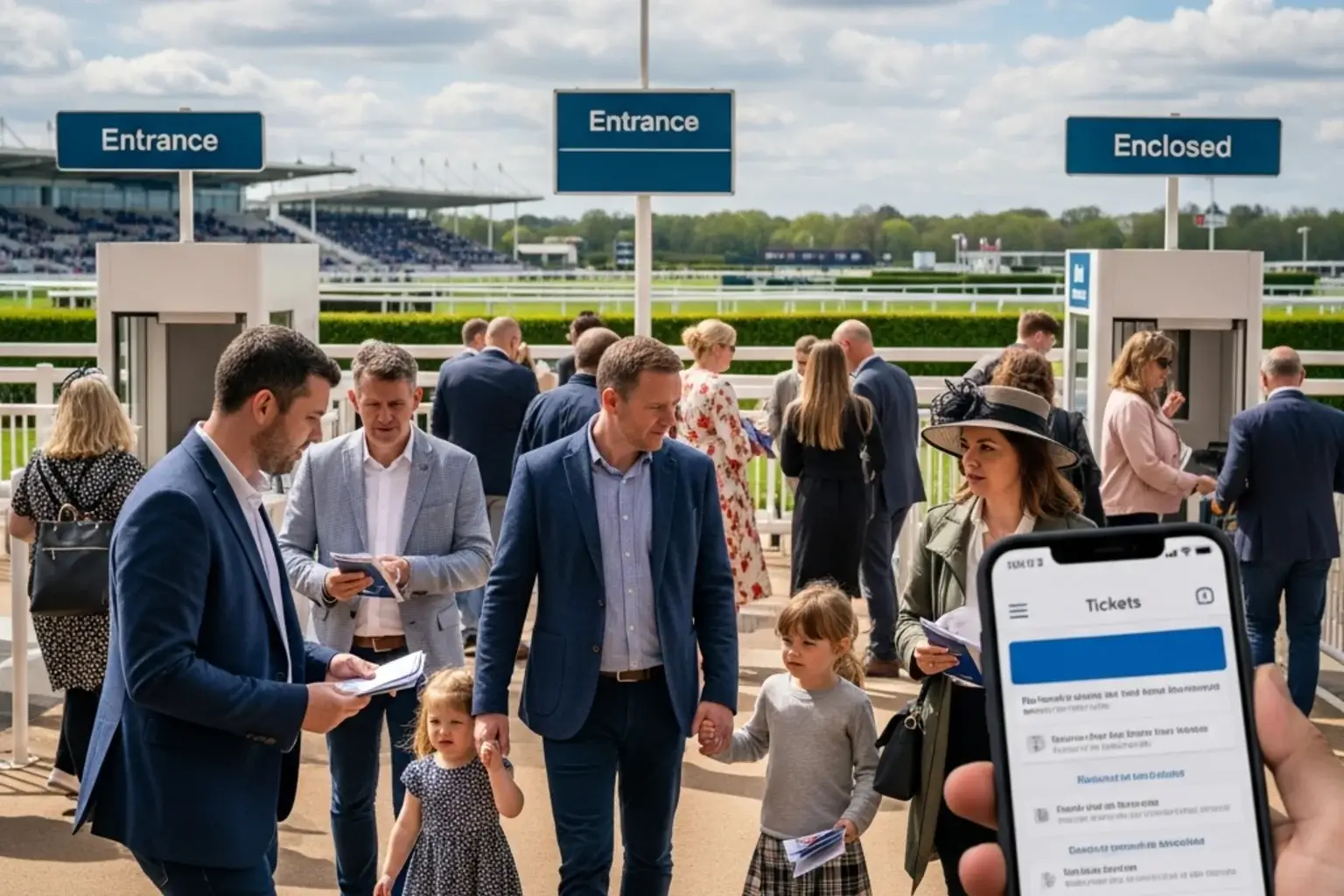
By car, the course is accessible from Junction 6 of the M25, heading south on the A22 toward East Grinstead. The postcode for satellite navigation is RH7 6PQ. On-site parking is free for standard race meetings, though Premier Racedays and the bigger fixtures occasionally require advance booking. The journey from central London takes around an hour in reasonable traffic; from Brighton, it is roughly forty-five minutes via the A23 and back roads through the Surrey countryside.
Tickets vary by enclosure and by the significance of the meeting. A standard admission to the all-weather fixtures typically falls in the range of affordable afternoon entertainment — competitive with cinema and considerably cheaper than football. The Premier Enclosure offers closer access to the parade ring and the winner's enclosure, while hospitality packages include dining options that range from casual to white-tablecloth. For family visits, Lingfield frequently offers discounted packages and free admission for accompanied children, particularly on weekend fixtures in the summer turf programme.
The practical advice for a first visit is straightforward: dress comfortably (there is no strict dress code for the standard enclosure on AW days), bring enough cash for a modest punt if you fancy the experience, and spend ten minutes in the parade ring before the first race watching the horses circle. You will learn more about reading condition and temperament in those ten minutes than in hours of staring at form on a screen. And if you are the kind of person who reads an article like this one before turning up, you will already be better prepared than the majority of the crowd.
Frequently Asked Questions About Lingfield Results
Is there a draw bias at Lingfield?
It depends entirely on which surface you are asking about. On the turf course at sprint distances — five and six furlongs — there is a well-documented and persistent bias in favour of high-drawn horses, those racing nearest the stands' rail. The geometry of the track forces low-drawn runners wide on the left-hand bend, costing them ground at a crucial stage. On the Polytrack all-weather circuit, the data over thousands of races shows no statistically significant draw bias at any distance, including the five-furlong straight. The surface is wider, the bends are less acute, and the consistent going removes the rail-favouring strip that turf develops in dry conditions. The practical lesson is to check the surface before you weight the draw into your assessment: turf sprints demand you factor it in; AW races allow you to focus on form and class instead.
What are the biggest races held at Lingfield Park?
Lingfield's three headline fixtures are the Winter Derby, the Derby Trial and the All-Weather Champions Vase. The Winter Derby is a Group 3 race over a mile and two furlongs on the Polytrack, first run in 1998 and returning to Lingfield in 2026 after two years at Southwell. The Derby Trial, established in 1932, is the venue's most historic event — nine winners have subsequently won the Epsom Derby, giving it a unique role in the Classic calendar. The AW Champions Vase is a more recent addition, featuring six races with a combined purse of £395,000, staged as a companion piece to the All-Weather Championships Finals Day at Newcastle. Beyond these, Lingfield hosts competitive handicaps throughout the all-weather season that attract quality fields in the Class 2 to Class 4 range.
What surface does Lingfield race on?
Lingfield races on three different surfaces. The primary circuit is a Polytrack all-weather track — a synthetic blend of recycled fibres, PVC, quartz sand and wax — which operates from October through April and hosts the majority of the fixture list. Inside the AW loop is a natural turf course used for Flat racing during the spring and summer months. The venue also stages National Hunt fixtures (hurdles and steeplechases) on a separate jumps layout during the winter. Polytrack was installed at Lingfield in 2001, replacing the original Equitrack surface laid in 1989. Only two other British racecourses — Kempton Park and Chelmsford City — race on Polytrack, while Wolverhampton uses a different synthetic surface called Tapeta. The Polytrack's consistent drainage and minimal variation in going make Lingfield's AW results particularly useful for form study, because the surface variable is largely removed from the equation.
