
UK Racehorse Ownership Costs and Syndicate Investment
 Available in US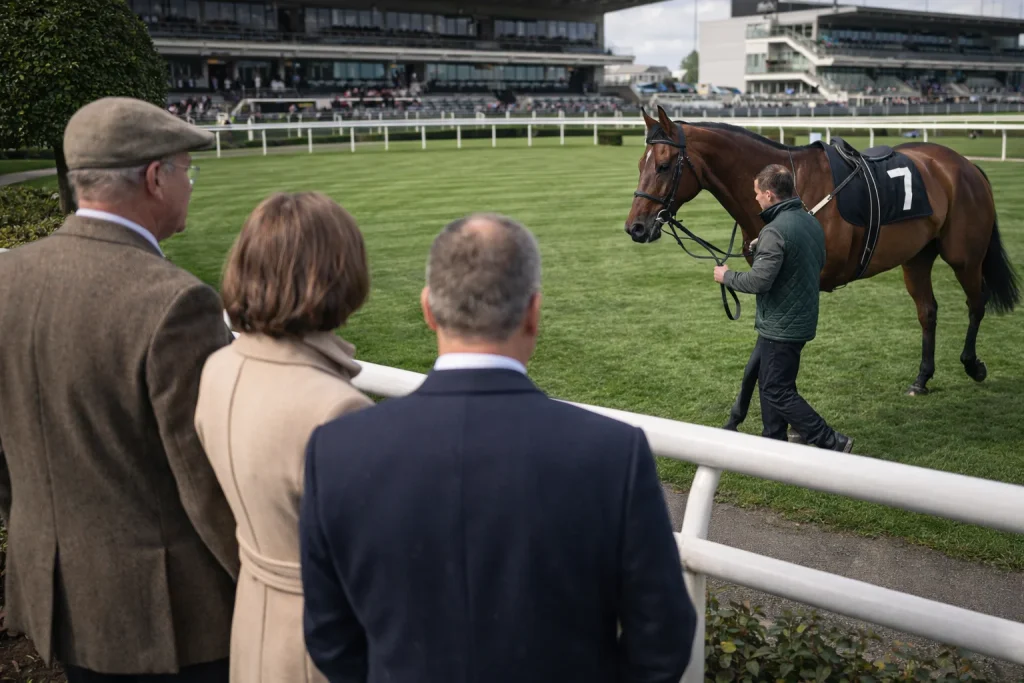
Calculating UK Racehorse Ownership Costs and Syndicate Shares
Owning a racehorse sounds like a rich person’s hobby. In the popular imagination, it involves stud farms, private helicopters, and Royal Ascot invitations. The reality, for the vast majority of owners in Britain, is considerably more modest — and considerably more accessible. Syndicate shares start at a few hundred pounds. Training fees, while not trivial, are predictable monthly outgoings. And the reward is not just prize money — it is access to a world that most racegoers experience only from the other side of the rail.
From fan to owner — a shorter road than you’d expect. This guide covers the real costs, the syndicate model that has democratised ownership, and why Lingfield Park’s busy calendar makes it a particularly appealing venue for first-time owners.
Costs: Training Fees, Vet Bills and Racing Entries
The headline cost of racehorse ownership is the training fee — the monthly charge paid to a licensed trainer for keeping, feeding, exercising, and managing the horse. Training fees in Britain vary by region and trainer reputation, but a realistic range for a Flat trainer is £1,200 to £2,500 per month. NH trainers tend to charge slightly less on average, though the fees at the top yards are comparable. These fees cover the daily upkeep: stabling, feed, bedding, routine veterinary care, and the staff who ride and look after the horse.
On top of the training fee come variable costs. Veterinary bills for treatments beyond routine care — injuries, diagnostic scans, dental work — are billed separately and can be unpredictable. Farriery (shoeing) is a regular cost, typically every four to six weeks. Transport to and from the racecourse is charged per journey, with the fee depending on the distance. Entry fees and jockey fees are deducted from any prize money won, but if the horse does not win, these come out of the owner’s pocket.
The total annual cost of sole ownership of a single Flat horse in training runs somewhere between £18,000 and £35,000, depending on the trainer, the location, and how often the horse races. This is significant but not inaccessible — it is comparable to a season ticket at a Premier League football club or a modest classic car hobby. The difference is that a racehorse earns back a portion of its costs every time it places in a race.
Syndicates and Shared Ownership Models
The syndicate model is what has made ownership accessible to people who cannot justify £25,000 a year on a hobby. A syndicate divides the costs — and the rewards — among a group of members, each of whom owns a share of the horse and pays a proportional fraction of the expenses.
Syndicate shares in Britain typically range from 2% to 25% of a horse. A 10% share in a horse with total annual costs of £25,000 means a commitment of £2,500 per year, or roughly £200 per month. For that, you receive owner’s badges on racedays (including access to the parade ring and the winners’ enclosure), a share of any prize money, and the experience of having your name in the racecard under the ownership details.
Several professional syndicate managers operate across British racing, handling everything from horse selection and trainer placement to membership communication and raceday logistics. Kevin Walsh, Racing Director at the Racecourse Association, has noted that the record prize money levels in 2026 represent “strong investment in the sport, and a continued incentive for participants to field horses at British racecourses.” That incentive flows through to syndicate owners, who benefit from the rising prize fund even at the lower tiers of competition.
Club membership is another entry point. Racing clubs — such as those run by trainers or commercial operators — offer an even lower cost of entry, sometimes as little as £30 to £50 per month. Club members do not technically own a share of the horse but receive many of the same benefits: raceday access, stable visits, and a sense of involvement. It is ownership-lite, and for many people it is the first step on a path that leads to a full syndicate share or even sole ownership.
Why Lingfield Suits First-Time Owners
Lingfield Park’s characteristics make it a particularly attractive venue for owners at the entry level of the sport. The course stages approximately 80 meeting days per year — one of the highest fixture counts in the country. For an owner, that frequency means more opportunities for their horse to race without travelling to distant courses, which keeps transport costs down and gives the trainer flexibility in placing the horse where conditions suit.
The all-weather programme is especially relevant. Because Polytrack conditions remain consistent year-round, a horse that performs well on the surface can race regularly throughout the winter — a period when many turf-only horses are turned out and incurring costs without earning. For an owner watching the monthly training bills accumulate, having a horse that can run every three to four weeks at Lingfield during the quiet months is a meaningful financial benefit.
The lower class levels at Lingfield — Class 5 and Class 6 handicaps — are the natural home for the type of horse that syndicate owners and first-time sole owners are most likely to have. These races are competitive enough to be engaging but do not require the calibre of horse that commands a six-figure purchase price. A modest horse bought for £5,000 to £15,000 can have a productive career at these levels, picking up prize money across Lingfield’s deep fixture list and providing its owners with regular raceday experiences.
Lingfield’s accessibility — under an hour from London by train, close to the M25, with ample parking — also matters for owners who want to attend in person. An owner who can visit the yard, watch morning gallops at a local trainer, and attend the races in the afternoon without it becoming a full-day expedition is an owner who stays engaged. And engagement, in ownership as in betting, is what keeps the experience rewarding.
