
Lingfield Field Sizes: Class Breakdown and Betting Market Impact
 Available in US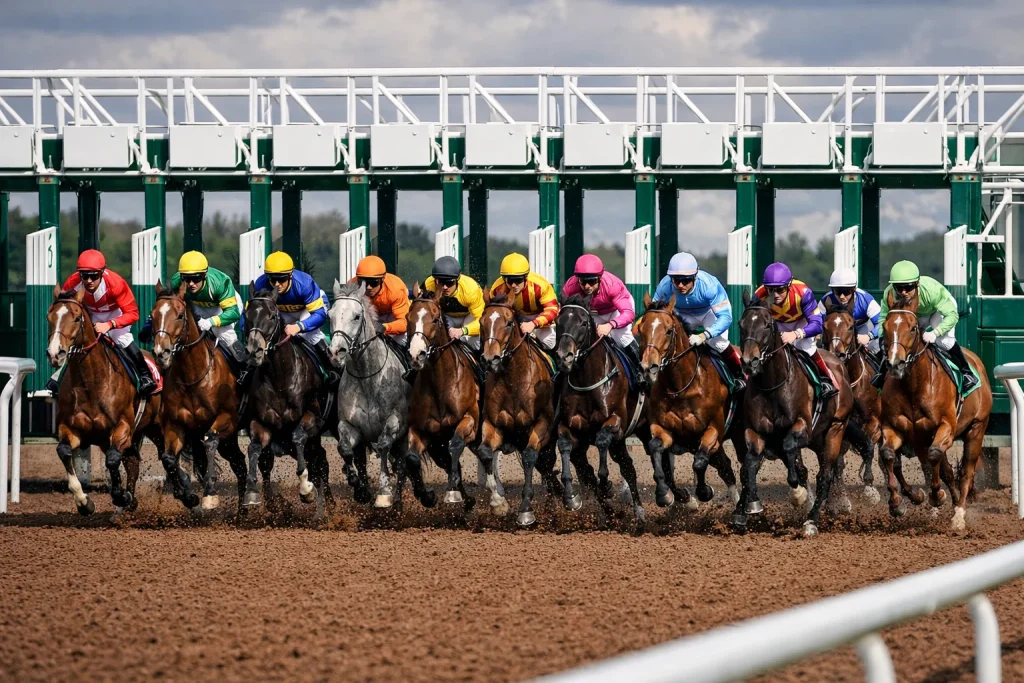
How Lingfield Field Sizes Impact Odds and Draw Value
Before you study the form, before you check the draw, before you read the going report, there is a number that sets the parameters for everything else: how many horses are in the race. Field size determines whether a race is a competitive puzzle or a two-horse match. It dictates the each-way terms, influences the pace, affects the relevance of the draw, and shapes the odds from top to bottom. At Lingfield, where field sizes vary dramatically across surfaces, classes, and meeting types, understanding what the runner count means for each race is where analysis begins.
More runners, more questions — or fewer runners, more answers. Both statements are true depending on your approach, and both apply across Lingfield’s calendar.
Field Size Trends at Lingfield: Five-Year Picture
Fewer horses in training means fewer entries per race, which means smaller fields. The effect is felt most keenly at the lower class levels, where the pool of eligible runners is already limited. Class 6 and Class 7 races — the everyday bread and butter of Lingfield’s midweek all-weather programme — are the most vulnerable to shrinking fields. A drop from an average of nine runners to seven or eight might not sound dramatic, but it changes the nature of the racing and the betting in ways that are easy to underestimate.
Lingfield’s high fixture volume — approximately 80 meetings a year — amplifies the effect. Each meeting requires a full card of races, and each race requires entries. When the same pool of horses is spread across more fixture days, individual races can thin out. This is not unique to Lingfield, but the course’s reliance on the all-weather programme, which runs through the months when horse numbers are at their seasonal low, means the impact is felt more consistently here than at a course that races only in the summer.
Impact on Results and Betting
Field size affects results through three main channels: competitiveness, pace, and betting value.
Competitiveness. A twelve-runner handicap is, on average, more competitive than a five-runner handicap. More runners mean more horses with a realistic chance, which means more uncertainty — and more uncertainty means longer prices and greater potential for value bets. Small fields compress the odds: in a four-runner race, even the outsider might be 5/1 or shorter. In a twelve-runner race, the range extends from short-priced favourite to 33/1 outsider, offering a wider spread of potential value.
Pace. Larger fields are more likely to produce a genuine pace up front, because the probability that at least one or two front-runners are in the lineup increases with runner numbers. A strongly run race tends to produce more reliable form — horses are tested throughout and the finishing positions reflect relative ability more accurately. In small fields, tactical races are common: jockeys wait on each other, the pace crawls, and finishing positions can be misleading.
Betting value. Each-way terms improve with larger fields (three places paid at eight or more runners, four places at sixteen or more in handicaps). The draw becomes more relevant in large fields on Lingfield’s turf sprints, where positional battles for the rail intensify as runner numbers increase. And the overround — the bookmaker’s built-in margin — tends to be higher in large fields, meaning the raw value per individual bet may be lower, but the range of potential value bets is wider.
On Lingfield’s Polytrack, where draw bias is minimal, field size’s biggest impact is on pace. On the turf course, it amplifies the draw bias — more runners in a five-furlong sprint means more horses fighting for the high-draw advantage, and the bias becomes more decisive as the field grows. Premier Racedays, where Flat fields averaged 11.02 in 2026, produce consistently stronger form than standard midweek cards precisely because the larger fields create more rigorous tests.
Field Sizes by Class: Where Are the Biggest Fields?
The class of a race is the strongest predictor of field size at Lingfield. The pattern is consistent: lower-class handicaps attract the most runners, and higher-class conditions races attract the fewest.
Class 5 and Class 6 handicaps on the all-weather regularly draw fields of eight to twelve runners at Lingfield. These are the races that fill out the midweek cards and generate the bulk of betting turnover. The runner pool is large because the rating bands are broad and many horses are eligible. Competition for prize money at these levels is fierce, which incentivises trainers to run horses frequently rather than wait for the perfect opportunity.
Class 4 handicaps typically attract slightly smaller fields — seven to ten runners is common. The rating band is narrower, the quality slightly higher, and trainers are more selective about when and where they place their entries. These races offer an appealing balance for punters: competitive enough to provide value but small enough that the form book is manageable.
Class 3 events and above — the Listed and Group races that anchor feature days like Vase Day and the Winter Derby — tend to attract smaller fields of four to eight runners. The quality filter narrows the eligible pool substantially, and trainers at this level are strategic about protecting their horses’ ratings. These races are harder to bet on each-way (fewer places paid) but offer the clearest form-reading opportunities because every runner is capable on its day.
Novice and maiden races, regardless of class, tend to produce small fields at Lingfield. The course is not a first choice for maiden runners from the major training centres — those horses are more likely to debut at Newmarket, Newbury, or Kempton. But Lingfield’s maiden races can offer value precisely because of their obscurity: less form to study means more potential for mispricing.
