
Each-Way Betting Strategy: UK Horse Racing Place Terms
 Available in US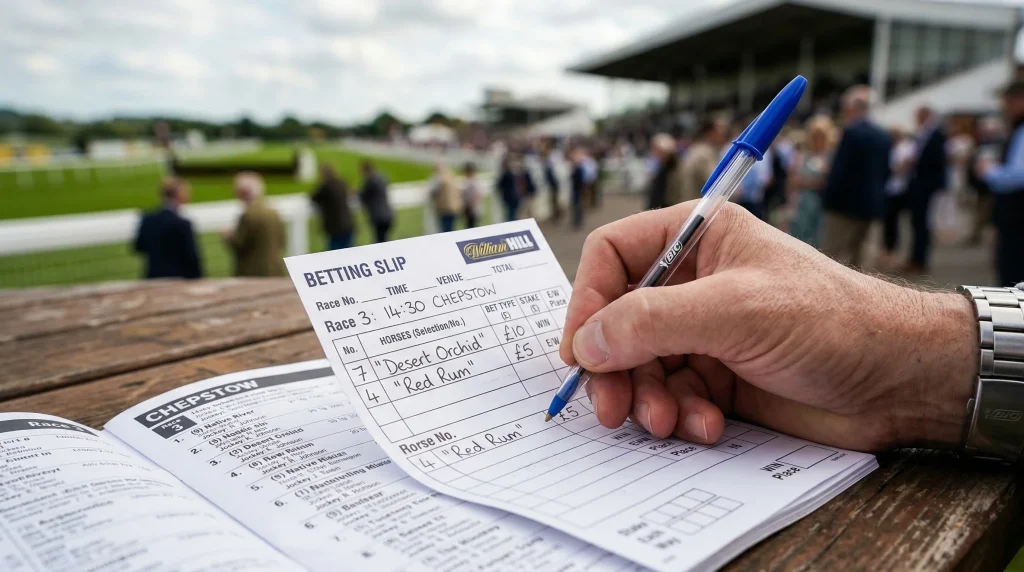
Calculating Each-Way Betting Returns and Place Terms
Ask a newcomer to racing what an each-way bet is and you will usually get a vague answer about backing a horse “to win or place.” That is technically correct and practically useless. An each-way bet is two separate bets, with two separate calculations, governed by terms that change depending on the number of runners and the bookmaker’s offer. Getting the mechanics wrong does not just reduce your potential profit — it can turn a winning selection into a losing bet.
At Lingfield Park, where field sizes vary from four-runner novice stakes to twelve-runner handicaps across both all-weather and turf cards, understanding when each-way betting makes sense and when it does not is a genuine edge. Two bets in one — if you know the rules.
Each-Way Mechanics: Win Part, Place Part, Terms
An each-way bet consists of two equal stakes: one on the horse to win and one on the horse to place. If you bet £10 each-way, your total outlay is £20 — £10 on the win and £10 on the place. These are settled independently.
If the horse wins, both parts pay out. The win part pays at the full odds. The place part pays at a fraction of the odds, determined by the each-way terms. Standard terms for non-handicap races with eight or more runners are one-quarter the odds for places first, second, and third. In handicap races with sixteen or more runners, many bookmakers extend the terms to one-quarter the odds for four places. In races with five to seven runners, only two places are paid. In races with four or fewer runners, most bookmakers void the place part entirely — you are effectively betting win only.
A worked example clarifies the maths. You back a horse at 10/1 each-way, £10 each way (£20 total). If it wins, the win part returns £110 (£10 × 10/1 = £100 profit + £10 stake). The place part returns £35 (£10 × 10/4 = £25 profit + £10 stake). Total return: £145 from a £20 outlay. If it finishes second or third but does not win, the win part loses. The place part still pays £35. Your net position: £35 return minus £20 stake = £15 profit.
Each-Way at Lingfield: When Field Sizes Favour the Place Part
In races with eight or more runners, three-place each-way terms apply as standard. This is the sweet spot for each-way betting at Lingfield’s all-weather meetings, where competitive Class 4 and Class 5 handicaps routinely draw fields of eight to twelve. In these races, backing a horse at a double-figure price each-way offers a genuine safety net: if it finishes in the first three, you are in profit or at least limiting your losses.
In smaller fields — five to seven runners — only two places are paid, and the value calculation shifts. You are now relying on your horse to finish first or second to see any return from the place part. Unless the odds are long enough to compensate for the reduced place terms, each-way betting in these smaller fields is often poor value. At Lingfield, these smaller fields tend to appear in novice races, maiden stakes, and higher-class conditions races where the pool of eligible runners is narrower.
As analysis from Geegeez has noted, Lingfield is “not a course for outsiders” — horses at 7/1 or bigger in the market have historically lost punters 45p for every pound bet to SP. This shapes each-way strategy directly. If outsiders lose at Lingfield, the each-way bet needs to be targeted at horses in the 5/1 to 10/1 range rather than speculative 20/1 shots. The place part offers genuine value when the horse has a realistic chance of finishing in the first three; it offers nothing when backed at a big price in hope rather than expectation.
Scenarios: When Each-Way Makes Sense and When It Doesn’t
Good each-way bet: a horse priced at 8/1 in a twelve-runner handicap on Lingfield’s Polytrack, with proven course form and a draw that does not disadvantage it. Three places paid at one-quarter the odds. If it places, you return £30 from a £20 outlay. If it wins, you return £130. The risk-reward ratio is favourable, and the selection has a credible chance based on the data.
Poor each-way bet: a 3/1 shot in a five-runner novice stakes. Only two places paid. The place part returns £17.50 from a £10 place stake (3/4 of £10 + stake). If the horse finishes second, your net return on a £20 total outlay is £17.50 — a loss of £2.50. You have effectively paid £20 to win £35 (if it wins) or lose money on a place. At those odds and in that field size, a win-only bet is superior.
Marginal scenario: a horse at 14/1 in an eight-runner race. Three places paid. The place part offers decent value if it runs into the frame, but the 14/1 price suggests the market does not rate its chances highly. At Lingfield, where outsiders underperform, backing a 14/1 shot each-way is defensible only if your form analysis gives you strong reason to believe the market has it wrong. Without that conviction, you are paying two stakes to chase a low-probability outcome.
The discipline is to run the maths before placing the bet, not after. Check the field size, check the place terms, calculate the return on a place-only finish, and decide whether the each-way bet offers better value than a win-only bet at the same odds. More often than people realise, the answer is win only.
To maximize your each-way returns, you must first master implied probability and odds formats to identify true value in the betting markets.
Always compare your calculated value against the live Lingfield Park race results available on our homepage.
