
Lingfield Derby Trial Winners and Epsom Classic Contenders
 Available in US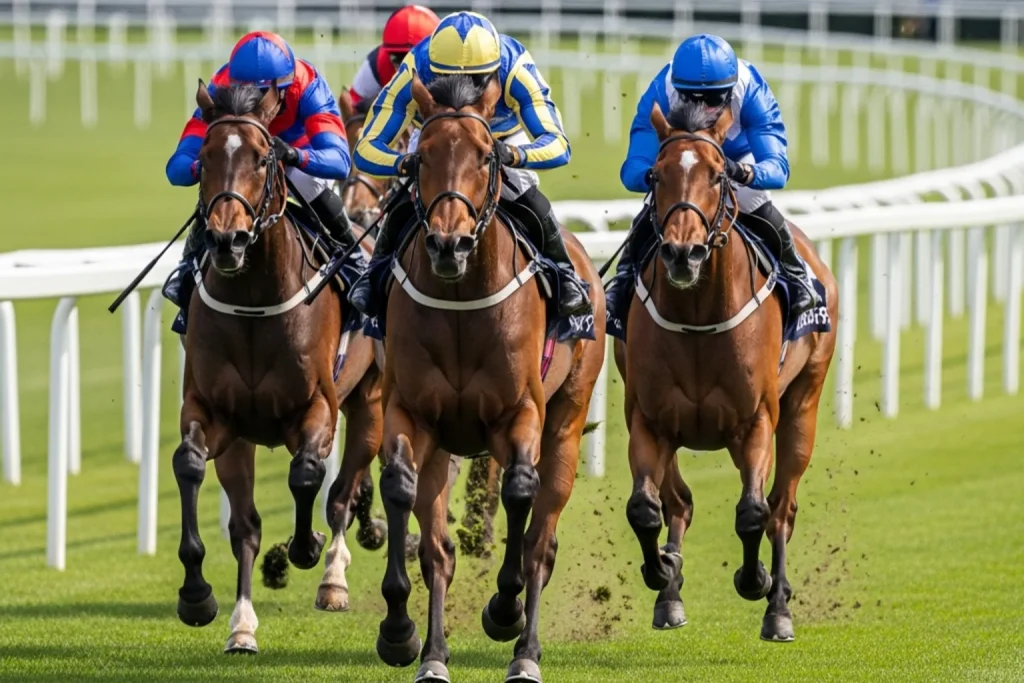
Evaluating Lingfield Derby Trial Winners for Epsom Prospects
Every May, a small field of three-year-olds lines up at Lingfield Park for a race that carries far more weight than its prize fund suggests. The Derby Trial Stakes is not a Group 1. It is not even a Group race — it holds Listed status. Yet for almost a century, it has served as one of the most reliable signposts on the road to Epsom, a race where trainers test their Classic hopefuls on a course that shares some of the Derby’s most distinctive demands: undulations, a left-handed turn, and a distance that sorts stamina from speed.
Derby Trial History: 1932 to the Present Day
The Derby Trial Stakes was first run in 1932, a period when trial races were a more central part of the Classic preparation calendar than they are today. In an era before international shipping of horses was routine, British trainers relied on domestic trials to gauge fitness, assess stamina, and give three-year-olds their first experience of racing beyond a mile. Lingfield, with its undulating turf course and left-handed bends, offered a natural proving ground — the similarities to Epsom’s contours were obvious, even if the scale was more modest.
The race was originally run over a mile and a quarter before settling at its current distance of approximately a mile and three furlongs, which mirrors the Epsom Derby trip of a mile and a half closely enough to test middle-distance stamina without fully replicating the Classic distance. The logic was sound: a horse that handled Lingfield’s gradients and tight bends over ten furlongs-plus was at least equipped for the physical demands of Epsom, even if the Derby itself would ask more searching questions of class and temperament.
Over the decades, the Trial’s status fluctuated with the fortunes of its participants. In some years, it attracted small but high-quality fields — horses with genuine Derby credentials using Lingfield as a final rehearsal. In others, the entries were more speculative, with trainers testing colts whose stamina was uncertain. What remained constant was the race’s ability to produce Derby winners at a rate that outstripped most alternatives. Nine winners of the Lingfield Trial went on to win at Epsom, a connection that gave the race a reputation in bloodstock circles that far exceeded its modest prize fund.
The race currently holds Listed status, which places it below Group level in the official hierarchy but ensures a respectable level of quality among the entries. The Listed tag also means the result carries Pattern race status on a horse’s record — a meaningful detail for future breeding value, which incentivises owners to run serious candidates rather than treat it as a throwaway prep.
From Lingfield to Epsom: 9 Winners Who Went All the Way
The statistic that defines this race is straightforward: nine Lingfield Derby Trial winners have subsequently won the Epsom Derby. The most recent was Anthony Van Dyck in 2019, trained by Aidan O’Brien, who won the Trial before going on to take the Derby at odds of 13/2. It was a result that reminded the racing world that Lingfield’s trial still carried genuine predictive power, even in an era of globalised training programmes and satellite operations.
The connection between the two races is not simply about winners. Adayar, who finished second in the 2021 Lingfield Trial, went on to win the Derby at Epsom — demonstrating that even a horse beaten at Lingfield could take enough from the experience to peak on the bigger stage. The Trial does not always identify the winner. What it consistently does is identify horses with the physical toolkit to handle Epsom: the balance for the downhill, the stamina for the climb, the temperament for a left-handed turn under pressure.
Kevin Walsh, Racing Director at the Racecourse Association, has spoken about the broader health of British racing’s prize money structure, noting that the record total of £194.7 million distributed in 2026 represents “strong investment in the sport, and a continued incentive for participants to field horses at British racecourses.” That investment context matters here. The Derby Trial may not command headlines, but it sits within an ecosystem where Classic preparation is financially supported from the ground up — trial races included. Owners willing to enter horses in the Lingfield Trial know that the reward is not just the day’s prize money but the enhanced value of a horse whose Derby credentials have been publicly tested.
The list of Trial-to-Derby winners spans decades and includes horses from different eras of the sport, confirming that the correlation is not a statistical anomaly from a single period. From wartime winners to modern-day stars, the pattern endures. Trainers continue to use the race as a genuine assessment tool rather than a box-ticking exercise, which is the strongest evidence of all that the Trial earns its place in the Derby preparation calendar.
Notable Winners and What the Trial Reveals
Beyond the nine who completed the Trial-Derby double, the race has produced a roster of notable performers who went on to distinguished careers. Some won the Trial impressively and then ran below expectations at Epsom — a reminder that potential assessed on a tight Surrey track does not guarantee delivery on the wide expanses of the Downs. Others used the Trial as a stepping stone to success in different races entirely: the Eclipse, the King George, the international middle-distance circuit.
What the Trial consistently reveals is whether a horse has the physical aptitude for undulating, turning tracks at a mile and a quarter or beyond. Lingfield’s turf course is not a straightforward galloping test. The gradients and the bends ask questions about a horse’s balance and coordination that flat, wide tracks simply do not pose. A horse that looks clumsy or unbalanced at Lingfield is likely to struggle at Epsom, where the camber and the downhill run to Tattenham Corner are more severe versions of the same challenge.
For bettors studying the Derby market, the Lingfield Trial remains one of the more useful data points available. A strong winner — one who travelled well through the undulations, handled the bend efficiently, and quickened in the straight — ticks several of the boxes that Epsom demands. A laboured winner, or one that struggled to find its stride on the turns, may still be talented enough to compete at the highest level, but the risk profile for the Derby changes materially. The Trial does not answer every question about a horse’s Classic prospects. It does, reliably, ask the right ones.
